Water Polo Made Simple

Arjun Mehta
| 20-07-2026
 · Sport Team
Lykkers! Have you ever watched a water polo match and wondered how players swim so quickly while passing, shooting, and working together at the same time?
At first glance, the game may seem fast-paced, but once we understand the basic rules and match flow, it becomes much easier to follow. Let's explore how this exciting water sport works and discover what makes every match so enjoyable to watch.
How a Team Is Organized
A water polo team has seven players in the pool at one time. Six players focus on creating scoring opportunities and defending their side, while one player guards the goal and works to stop incoming shots. Teams also have substitute players waiting outside the pool. Substitutions can happen many times during the match, allowing fresh teammates to join the action and maintain the team's speed and energy.
Because players are constantly swimming, changing direction, and competing for position, rotating teammates is an important part of the overall strategy. Good communication helps every player understand their role during each stage of the match.
The Playing Area
Water polo matches are usually held in a swimming pool measuring between 25 and 30 meters long. The water is at least 1.8 meters deep, meaning players cannot touch the bottom during play. Everyone stays afloat by continuously moving their legs while using their hands to pass, receive, and shoot the ball.
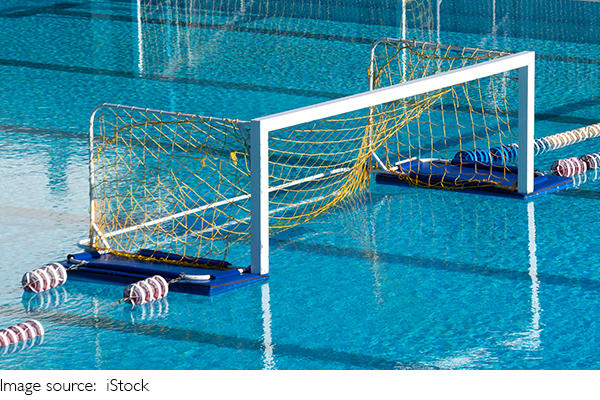
The goal floats above the water surface and measures 3 meters wide and 0.9 meter high. Although it looks simple, scoring can be challenging because the goalkeeper and defenders work together to block shooting angles.
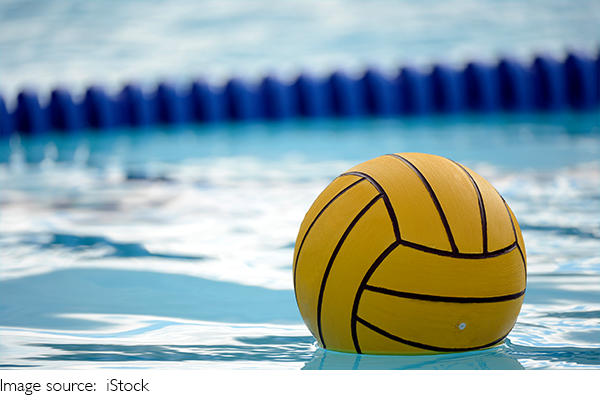
The ball is similar in size to a soccer ball, but it is designed with a textured surface that makes it easier to grip in wet conditions. Even so, controlling it while swimming requires plenty of practice.
How the Match Begins
Each match starts with a sprint for possession. Players line up near their own goal line while the referee places the ball at the center of the pool. As soon as the whistle sounds, swimmers race toward the middle, with each team trying to reach the ball first.
Winning the opening sprint gives one side the first attacking opportunity, although possession changes many times throughout the game.
Understanding Match Time
International matches are divided into four periods. Each period lasts eight minutes of official playing time, and the clock stops whenever play is paused. Between periods, teams usually have a two-minute break to rest, discuss tactics, and prepare for the next stage.
If both teams finish with the same score in certain competitions, additional playing time or a penalty shootout may be used to decide the winner.
How Teams Score
Scoring is simple to understand. A goal counts when the entire ball crosses the goal line between the goalposts and below the crossbar.
Players create scoring opportunities through accurate passing, clever movement, and well-planned teamwork. Quick decisions are important because the attacking team has only 30 seconds to take a shot. If no shot is attempted before the shot clock expires, possession automatically goes to the opposing team.
This time limit keeps the match moving at a fast pace and encourages continuous action.
Important Playing Rules
Several rules help keep the game fair and organized.
- Players are not allowed to stand on the bottom of the pool or push themselves upward using the floor. They must stay afloat throughout play.
- Only the goalkeeper may control the ball with both hands inside the designated six-meter area in front of the goal. Field players handle the ball with one hand while swimming, passing, or shooting.
- Physical contact naturally occurs as players compete for position, but actions such as pulling, pushing, holding, or kicking opponents are considered fouls. Officials carefully monitor every contest to keep play fair and safe.
Common Fouls and Penalties
Not every foul carries the same consequence.
- A standard foul usually gives possession to the opposing team through a free throw. Play quickly resumes, helping maintain the fast rhythm of the match.
- More serious fouls can result in temporary exclusion. During this period, the player's team competes with one fewer teammate in the pool, giving the opposing side a numerical advantage.
- If a defender prevents a clear scoring opportunity inside the six-meter area by committing a major foul, the referee awards a six-meter penalty throw. This gives the attacking player a direct opportunity to score against the goalkeeper.
Changing Players During the Match
Unlike many sports that limit substitutions, water polo allows frequent player changes. However, substitutions must take place through the designated substitution area beside the pool.
This system allows teams to maintain fresh swimmers throughout the match while ensuring that substitutions remain organized and fair.
Corner Throws and Timeouts
When the defending team touches the ball last before it crosses the goal line outside the goal, the attacking team receives a corner throw. This creates another opportunity to restart play close to the goal and build an attacking move.
Each team may also request timeouts in accordance with the competition rules. Coaches often use these breaks to discuss positioning, adjust tactics, or prepare a planned scoring play before the game resumes.
Why Teamwork Matters So Much
Water polo combines swimming speed, ball control, accurate passing, smart positioning, and quick thinking. Since everyone is constantly moving, teammates need to communicate clearly and understand one another's movements.
Strong teamwork often creates better scoring opportunities than individual effort alone. Successful teams move together, support one another, and react quickly as the match shifts from attack to defense within seconds.
Watching players coordinate their passes while staying balanced in deep water demonstrates just how much skill, endurance, and practice this sport requires.
Final Thoughts
Lykkers, now that we have explored the basic rules and match flow of water polo, the next game you watch will likely make much more sense. From the exciting opening sprint to the final whistle, every moment depends on teamwork, quick decisions, and steady swimming skills. Whether you enjoy the fast attacks, precise passing, or spectacular saves by the goalkeeper, water polo offers an exciting combination of athletic ability, strategy, and teamwork that makes every match rewarding to watch.